Your Questions, Answered
-
TMD Remedy offers personalised care for jaw discomfort, facial tension and related muscular symptoms.
Your treatment may include facial massage, myofascial and trigger point release, clinical intraoral techniques and medical acupuncture. We choose the techniques together following an assessment, guided by your symptoms, preferences and comfort.
Practical self-care advice and regular reviews form part of your care.
-
No. Acupuncture is an option, rather than a requirement.
We’ll discuss your symptoms, medical history and preferences before deciding on a suitable approach. Your treatment can focus on hands-on techniques only if acupuncture isn’t appropriate or you would prefer not to have it.
There is no set routine that I follow for everyone. Your plan is individual to you and can change as your needs change.
-
My main focus is jaw pain, and TMJ-related discomfort: jaw clicking or popping, muscular tension associated with clenching or grinding, restricted jaw movement or opening, facial tightness, tension-type headaches, and related neck and shoulder discomfort.
Assessment helps determine whether treatment is appropriate or whether you need support from your dentist, GP or another professional.
-
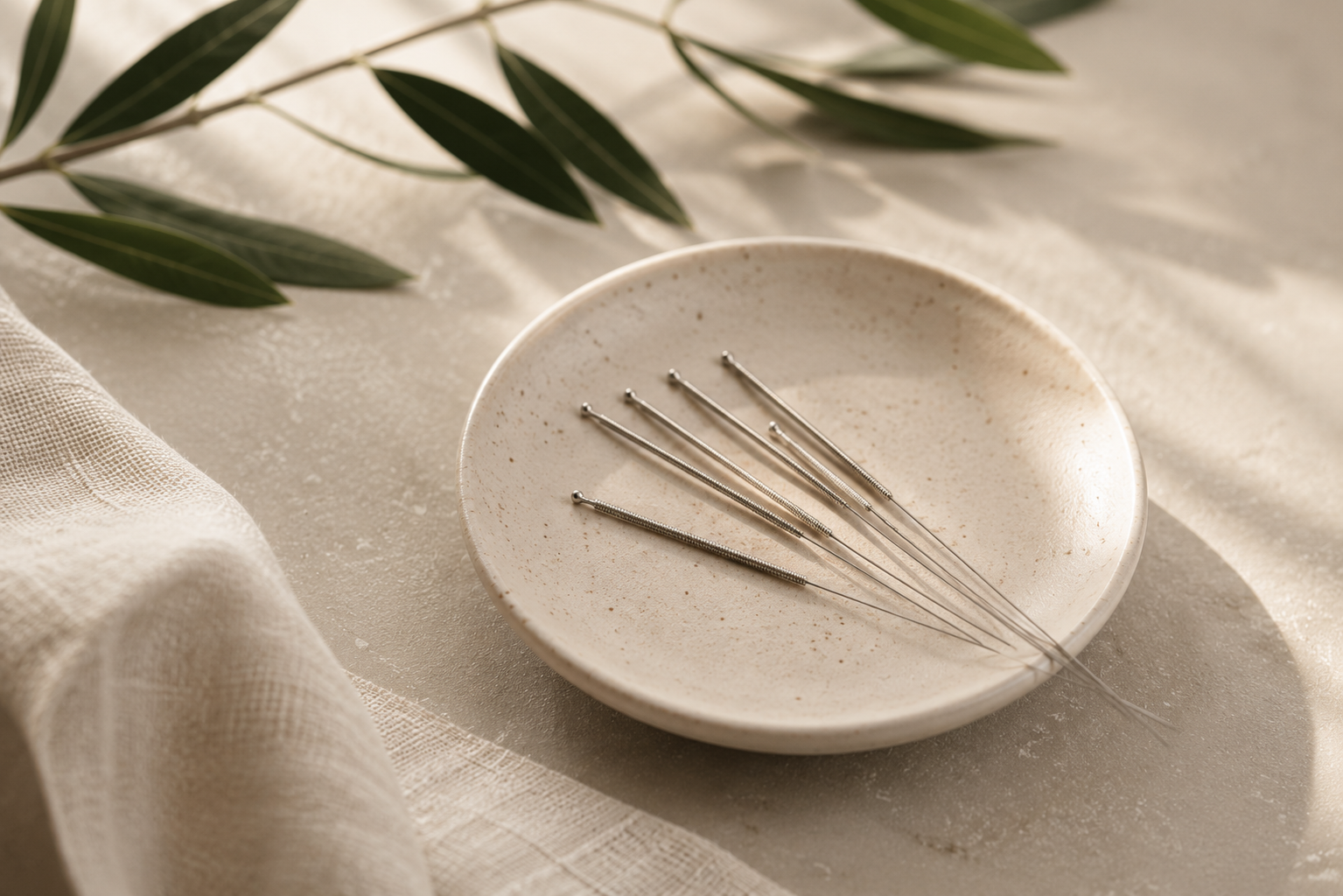
I use very fine, sterile, single-use needles, which are safely disposed of after treatment.
Most people are surprised by how comfortable acupuncture actually is. You may feel a brief tingling, dull ache or warmth as the needle is placed, but this usually settles within a few seconds. Many patients find treatment deeply relaxing.
We’ll discuss the technique and your questions before you decide whether to include acupuncture.
-
Yes, when carried out by a trained healthcare professional using sterile, single-use needles, acupuncture has an excellent safety record.
-
Acupuncture is suitable for most adults and older teenagers (typically 16 years and over).
Before treatment, you’ll complete a full medical history so we can ensure acupuncture is safe and appropriate for you. If you’re pregnant, have certain medical conditions or take particular medications, your treatment may need to be adapted.
-
This depends on your condition, how long you’ve had it, and your individual response to treatment.
As a general guide:
Recent or acute pain: 4-6 sessions
Long-standing or persistent pain: 8–12 sessions or more
Your treatment plan will be discussed during your initial consultation and reviewed as you progress.
-
Usually, yes.
Many people taking blood-thinning medication can safely receive acupuncture, although there may be a slightly increased chance of minor bruising.
If you’re unsure whether acupuncture is appropriate for you please get in contact and we can discuss your needs further.
-
How long is the appointment?
Initial consultation: 90 minutes
Follow-up treatment: 60 minutes
Extended treatment: 90 minutes
Your first appointment includes a detailed assessment, discussion of your symptoms and your first treatment.
-
No. You don’t need a referral from your GP, dentist or any other healthcare professional. You can book directly at any time.
However, I regularly work as part of a collaborative approach to patient care from referring dentists, GPs, physiotherapists and other healthcare professionals.
If you’re currently receiving treatment elsewhere, acupuncture can often be safely integrated into your overall treatment plan. If you have any questions please get in touch and/or discuss referal options with your current medical professional.
-
Yes. There are programmes offering 180, 240, 360 or 720 minutes of follow-up care.
Treatment time can be used across 30-, 60- or 90-minute appointments, allowing the length and frequency of visits to suit your agreed plan.
Programmes are optional and discussed following assessment. Please contact me or ask in clinic about suitability, purchase and the programme terms.
-
Yes. Most people are able to drive home immediately after treatment.
Occasionally, people may feel very relaxed or slightly light-headed for a short time afterwards. If this happens, we recommend sitting for a few minutes before leaving until you feel completely comfortable.
-
Yes, light activity is absolutely fine, however, I generally advise you take it easy the rest of your day and if possible to exercise prior to your treatment.
Most people can return to their normal routine the following day.
-
Your first appointment lasts 90 minutes and includes a detailed consultation, medical history review, assessment and first treatment where appropriate.
We’ll discuss your symptoms, how they affect everyday life, and what you hope to achieve. I’ll explain the proposed techniques, their potential benefits and risks, and any alternatives.
Together, we’ll agree on a personalised plan, with time for questions and relevant self-care advice.
-
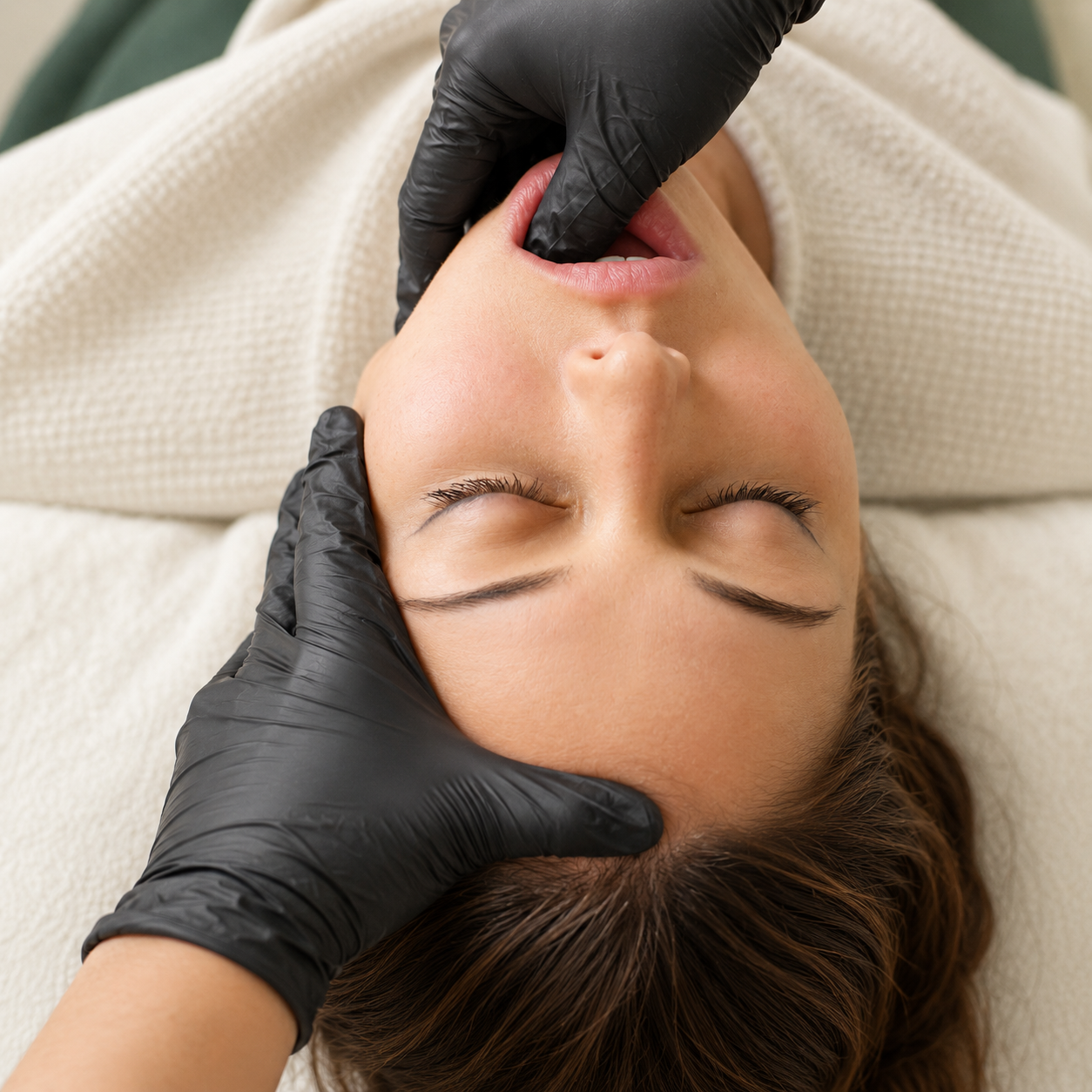
Clinical intraoral muscle release is a specialised hands-on massage technique carried out inside the mouth, using examination gloves.
It focuses on the jaw and cheek muscles, and surrounding soft tissues that can be difficult to reach from outside the face. The aim is to ease areas of deep muscular and fascial tension as part of your individual treatment plan.
Every technique is explained beforehand and carried out with your consent.
-
It can feel unfamiliar at first, and some tight areas may feel slightly tender, but overall it can be a very relaxing and enjoyable experience.
Pressure is constantly adapted to your comfort, with breaks whenever you need them. You remain in control throughout and can ask me to reduce the pressure, pause or stop at any time.
If you prefer not to have intraoral work, we can discuss other suitable techniques.
-
Facial massage uses considered hands-on techniques around the face and jaw, with pressure and pace adapted to your needs. This helps me get a better tactile understanding of the tension around your face whilst preparing the muscles before going intraorally. As a bonus it helps you get to a lovely state of relaxation.
Where appropriate, I may include gentle techniques intended to encourage lymphatic drainage, covered within my advanced facial massage and buccal training. These form part of the overall treatment rather than a separate specialist lymphatic drainage service.
The focus is therapeutic care for facial tension, alongside a calm and comfortable experience
-
These are targeted hands-on techniques that focus on areas of muscle tightness and tenderness around the face, jaw, neck and shoulders.
Myofascial techniques work with the muscles and surrounding connective tissues. Trigger point techniques focus on particularly tender areas within muscles.
Pressure is adjusted to your comfort and response; treatment does not need to be forceful.
-
If you’re new to the clinic, please book the 90-minute Initial Consultation + Treatment.
For existing patients:
30 minutes: a short focused follow-up for one area.
60 minutes: the standard follow-up, allowing time for review and a broader treatment.
90 minutes: additional time for several areas or more focused work.
75-minute reassessment: for returning patients whose last visit was more than six months ago.
If you’re unsure which follow-up to choose, please get in touch.
-
Please wear comfortable clothing that allows easy access to your neck, shoulders and upper back, as these areas are commonly treated.
For women, a strappy top or strapless bra is ideal. Men may be asked to remove their shirt if treatment of the neck, shoulders or upper back is required.
Your comfort and privacy are always respected, and only the area being treated will be exposed.
-
Yes. It’s best to have a light meal or snack beforehand and stay well hydrated. We don’t recommend attending on a completely empty stomach.
-
We focus on musculoskeletal pain, including:
TMJ pain and jaw clenching (bruxism)
Neck pain
Shoulder pain
Upper back pain
Tension headaches
Facial pain
Muscle tightness and sports-related pain
-
Yes. Please tell me about your night guard, current dental care and any recent procedures so I can assess your suitability for treatment. We can consider how muscular care might fit alongside your dentist’s recommendations and whether time for healing is needed.
Treatment does not replace dental assessment or advice about your teeth, bite or appliance.
-
At Pain Relief Acupuncture
✓ GDC registered dental care professional
✓ British Dental Acupuncture Society trained
✓ Over 8 years of clinical patient care experience
✓ Special interest in TMJ disorders, jaw clenching and head & neck pain
✓ Evidence-informed treatment tailored to your individual needs
✓ Additional training in clinical myofascial release, including intraoral techniques for the muscles inside the mouth and around the jaw
-
Responses vary person to person: you may feel more relaxed or notice a change in tension or movement straight away, while others will take slightly longer.
Hands-on treatment can leave temporary tenderness. Acupuncture can cause minor bleeding or bruising, tiredness, dizziness or a temporary increase in symptoms. Serious complications are rare, and relevant risks will be discussed before treatment.
Generally, you will feel sleepy and a bit groggy following treatment, which is why I recommend to not have much planned after your session. Drink lots of water, and have a calm evening where possible.